Common Pests and Tree Health In The Saskatoon Area
Tree pests pose a significant challenge for urban forestry management in Saskatoon, where the city’s diverse canopy of native and planted species faces threats from both indigenous insects and introduced invasive species. The harsh prairie climate, characterized by long, cold winters and relatively short growing seasons, creates unique conditions that influence pest population dynamics and tree vulnerability.
Common destructive insects—emerald ash borer, forest tent caterpillar, and various aphids—threaten Saskatoon’s urban forest. They damage residential boulevards lined with elm and ash, as well as neighborhoods with mature poplar and birch trees.
Identifying these pests, understanding their life cycles, and implementing effective management strategies is essential for homeowners, arborists, and municipal staff. Protecting Saskatoon’s urban canopy ensures vital environmental benefits, including cleaner air, better stormwater management, and reduced urban heat effects in this growing prairie city.
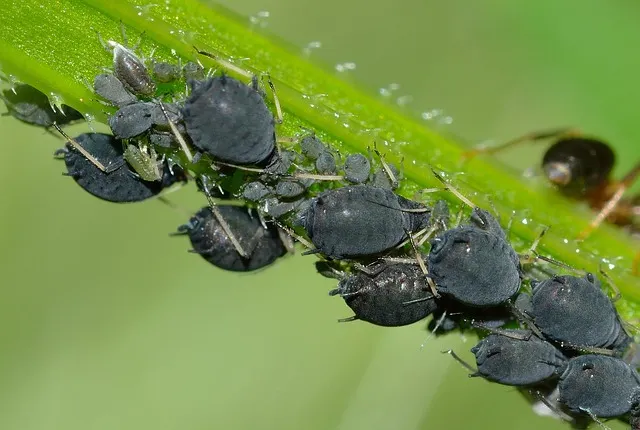
Aphids
These tiny aphids measure about 2mm, are pear-shaped, and fragile. They are usually pale green but can occasionally display mixed colors. In Saskatoon, many aphid species affect a variety of plants. While they change leaf shape and size, they rarely harm overall plant health.
Since aphids are generally harmless, avoid using pesticides too quickly. If infestations become a nuisance, specific aphid control products are available. Always read labels carefully, as pesticides can impact other areas of your garden.
A natural alternative is introducing ladybugs, a method known as permaculture. This eco-friendly approach helps manage aphids safely while supporting a healthy yard and home.
Ash Leaf Cone Roller
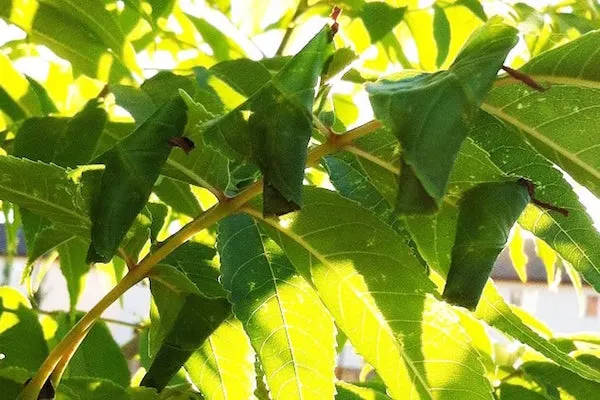
The Ash Leaf Cone Roller is a newly observed pest in urban Saskatoon, primarily affecting ash trees. This small brown moth lays eggs on young ash leaves. The larvae feed between the leaf surfaces in a process called leaf mining. Once a leaf is consumed, larvae drift on silk threads to new leaves.
At the new leaf, they roll it into a cone and pupate. Adults usually emerge in summer but enter a dormant state until fall. Once awake, they seek shelter to survive winter and reappear the following year. Although considered a pest, Ash Leaf Cone Rollers rarely cause enough damage to require treatment. Maintaining tree health with proper watering and pruning is sufficient to protect your ash trees.
Cottony Ash Psyllid (CAP)
The cottony ash psyllid (CAP) is a non-native pest in Saskatoon, severely affecting Manchurian and Black Ash trees. Drought combined with infestation is causing significant tree loss. CAPs are tiny, green to yellow-green insects, most noticeable by the damage they leave. They produce a white cottony residue along leaves, and heavy infestations can partially defoliate trees. Remaining foliage often twists into a cauliflower or corkscrew shape.
Saskatoon’s 2016 study identified that Black Ash, Manchurian Ash, and hybrids like Northern Treasure and Northern Gem are most affected. Other local species, including Green, White, and Mountain Ash, are generally not impacted.
There is no quick solution for CAP removal. Chemical treatments slow damage but cannot stop it. Saskatoon has opted to remove affected trees: 1,600 in 2018, with 2,100 and 800 planned for 2019 and 2020.
If you notice symptoms, contact a local arborist at 306-400-5425 or the City of Saskatoon for assessment. Prompt action is crucial, as CAP spreads quickly.


Dutch Elm Disease
Dutch Elm Disease (DED) arrived in North America from the Netherlands in the 1930s, devastating millions of elm trees. The first confirmed case in Saskatoon was reported in July 2015. The best time to spot infected trees is between June and August, when symptoms appear on leaves. They turn yellow, wilt, then brown and curl before falling off.
The disease spreads through elm bark beetles. As these beetles fly to lay eggs, fungal spores attach to their bodies and infect new elm trees.
For this reason, the City of Saskatoon bans pruning elm trees from April to September when beetles are most active. Pruning outside this period encourages strong growth and reduces disease risk.
Saskatchewan law also prohibits storing, transporting, or using elm wood products, except for delivery to a designated landfill.
If you suspect Dutch Elm Disease in your tree, contact Saskatoon Tree Removal or the City of Saskatoon for assessment and management.
Emerald Ash Borer
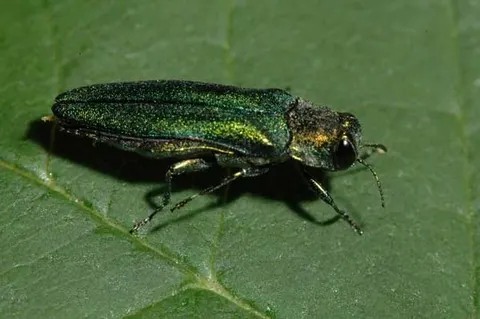
This pest is highly destructive. The insect in known to affect all types of ash trees, with the larvae of the emerald ash borer feeding beneath the bark. This pest is not currently in Saskatoon, although monitoring stations have been set up in many locations across the city. At the time of this writing, roughly 25% of all trees on the cities property are ash trees.
An outbreak of the emerald ash borer would be devastating, and being as they’re so hard to detect, the city of Saskatoon has multiple traps laid out and monitored regularly. This insect is able to spread through the transport of infected wood. Please be responsible when taking wood in and out of other municipalities, and always contact the department of forestry to find out if there are any restrictions on the transport of wood.
Forest Tent Caterpillar
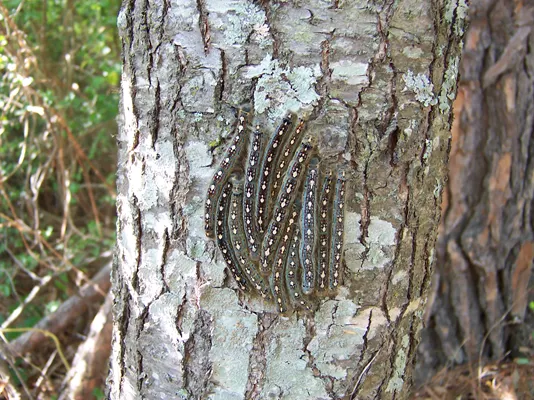
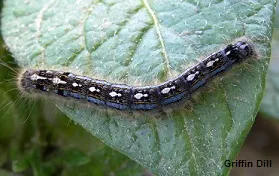
The forest tent caterpillar has a dark body with white spots along its back. Fully grown larvae reach about 5 cm and are covered in long hairs called setae. In June, they spin cocoons, and shortly after, a yellow, furry-bodied moth emerges.
During the larvae stage, forest tent caterpillars feed on many tree leaves, including chokecherry, ash, and poplar. In heavy outbreak years, they can completely defoliate trees. While one year of defoliation usually won’t harm a tree, repeated years of leaf loss can weaken it.
Outbreaks typically last 2 to 4 years but can continue up to 7 years. Even during peak years, most Saskatchewan trees remain healthy and rarely need treatment. In large numbers, forest tent caterpillars may be a nuisance but do not cause lasting damage.
You can reduce larvae in your yard by monitoring trees in early spring. Prune branches with white cocoons within reach and place them in a garbage bag for disposal. Spraying emerging caterpillars with water also helps limit leaf damage. No pesticides are needed, as this is a natural lifecycle.
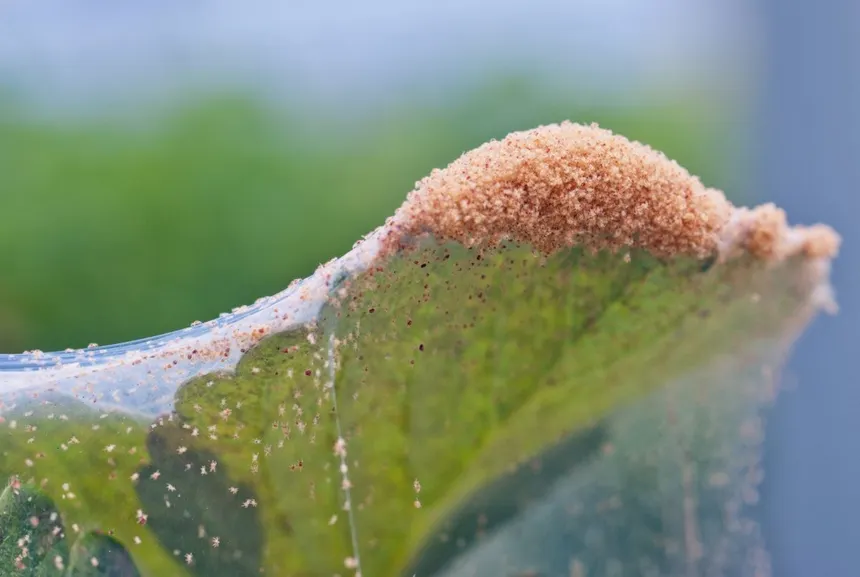
Spider Mites
Are usually very small, less then 1mm in length, and are different then insects. They have only 2 body segments and have 4 pairs of legs, and typically attack fir, spruce, cedar and juniper trees. These pests feed on conifers, which leads to the needles or foliage to turn yellow and fall off.
They lay their eggs in the fall at the base of the needles, and hatch in the later spring months. Once hatched, the new brood will feed on the lower, inner most greenery which results in the most damage. At this time, the City of Saskatoon doesn’t have a control measure for dealing with spider mites, so if you suspect your tree has been infected contact your local arborist to assess the extent of the damage and to talk about options to control the problem.